

Its December 31 balance sheet should show the unearned $1,000 as the current liability Deferred Premiums. An adjusting journal entry is an accounting entry made at the end of an accounting period to record income or expenses that have not been previously recognized. These entries ensure that financial statements accurately reflect the company’s economic activity, adhering to the accrual basis of accounting. This means revenues and expenses are recorded when they are earned or incurred, regardless of when cash transactions occur.
Composition of an Adjusting Entry
This accuracy can affect your taxable income, potentially lowering your tax liability or avoiding penalties for underreporting. Keeping your records straight with these entries is key to smooth sailing come tax time. If adjusting entries are not made, financial statements may become inaccurate, reflecting a misleading view of a company’s financial health. This could result in incorrect financial decisions and potential issues with tax reporting and compliance.
🔹 1. CASH BASIS vs ACCRUAL BASIS (USA)

A nominal account is an account whose balance is measured from period to period. Nominal accounts include all accounts in the Income Statement, plus owner’s withdrawal. adjusting entries examples They are also called temporary accounts or income statement accounts.
What are the risks associated with unbilled revenue?
They help provide a clear audit trail of how money flows in and out of the business during a given period. In this way, they support more accurate records of the business’s income and expenses in a certain month, quarter, or year. 1,250 because interest was earned in the three-month period but had been previously unrecorded. When the company recognizes the supplies usage, the following adjusting entry occurs. Under the cash method, revenue and expenses are recognized in the period in which the cash flows into or out of the company bank account. Cash accounting and accrual accounting are two distinct accounting methods that define when revenue and expenses are recognized.
Step 4: Repeat the Process
Another example of an adjusting entry would be if a company pays $15,000 for a one-year insurance policy on June 1. At the end of the year, the company would need to make an adjusting entry to only record the seven months’ worth of the insurance premium expense that applied to the year. Thus, if you need to make an adjustment to decrease the value of accrued expenses, you would need to debit the accrued expense account and credit the appropriate expense account.
The form will specify the items being ordered, the quantity, price, and terms. One copy is sent to the vendor (supplier) of the goods, and one copy is sent to the accounts payable department to be later compared to the receiving ticket and invoice from the vendor. The net of the asset and its related contra asset account is referred to as trial balance the asset’s book value or carrying value. You should consider our materials to be an introduction to selected accounting and bookkeeping topics (with complexities likely omitted). We focus on financial statement reporting and do not discuss how that differs from income tax reporting. Therefore, you should always consult with accounting and tax professionals for assistance with your specific circumstances.

What are Adjusting Journal Entries (AJE)?
- Companies that take the time to properly record and adjust their accounts will be better equipped to make informed business decisions and meet their financial obligations.
- Unearned revenue is not immediately realized as cash, as it represents future performance.
- A credit of $375 will need to be entered into the asset account in order to reduce the balance from $1,100 to $725.
- Not every transaction produces an original source document that will alert the bookkeeper that it is time to make an entry.
- Depreciation is calculated by subtracting the asset’s salvage value from its original cost and dividing it by its useful life.
Asset productivity decreases over time, so each accounting period must be charged with part of the asset’s cost. There is one more type of journal entry that doesn’t fit a tidy classification. For instance, if you find an error or some other material misstatement, you may use an adjusting entry to correct it. Reviewing several examples helps accountants catch timing errors, compare patterns across periods, and verify whether accrued items or deferrals have been properly updated.
Such revenues are recorded by making an adjusting entry at the end of the accounting period. Thus, every adjusting entry https://www.kbelectronics.in/columbus-oh-accounting-firm-whitehall-cpa/ affects at least one income statement account and one balance sheet account. Adjustment entries are an important tool for businesses to ensure that their financial statements are accurate.
Why are Adjusting Journal Entries necessary?
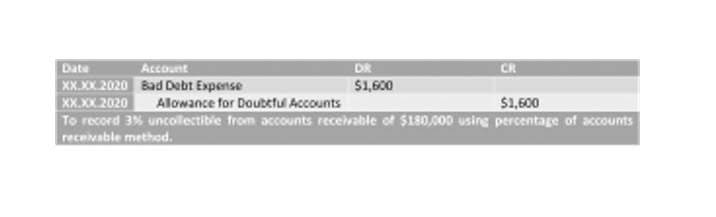
An asset account which is expected to have a credit balance (which is contrary to the normal debit balance of an asset account). For example, the contra asset account Allowance for Doubtful Accounts is related to Accounts Receivable. The contra asset account Accumulated Depreciation is related to a constructed asset(s), and the contra asset account Accumulated Depletion is related to natural resources. A current asset representing the cost of supplies on hand at a point in time. The account is usually listed on the balance sheet after the Inventory account.